


Overview of Corrective Jaw Surgery
Corrective jaw surgery, also called orthognathic surgery, changes the structure of your upper or lower jaw to bring it into proper alignment. It’s usually part of a two‑to three‑year process that combines surgery and orthodontics. When the jaws are too far forward, too far back, or asymmetrical, they can cause bite problems, speech issues, and facial imbalance. Surgery realigns the jaws for better function and aesthetics, which braces alone cannot achieve.
Who Needs Corrective Jaw Surgery?
People may need jaw surgery to treat conditions such as malocclusion (overbite, underbite, or overjet), jaw fractures, cleft lip or palate, jaw cysts or tumors, obstructive sleep apnea, and TMJ disorders. Candidates usually have completed jaw growth, often in the late teens to early twenties. Jaw surgery is often considered when orthodontic treatment alone cannot correct a misaligned bite
Why Consider Corrective Jaw Surgery?
Functional improvement: Properly aligned jaws enhance bite efficiency, speech clarity, and breathing.
Aesthetic balance: Restoring harmony between the upper and lower jaws improves facial symmetry and confidence.
Long‑term oral health: Correcting misalignment can reduce tooth wear and help prevent TMJ disorders.
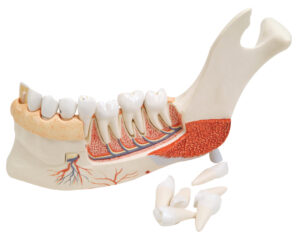
A detailed anatomical model of the lower jaw shows teeth, nerves and bone structure, illustrating how corrective jaw surgery addresses the underlying anatomy
Preparation and Planning
Preparation typically starts with orthodontic treatment to align your teeth before surgery. This phase can last several months and includes multiple appointments, measurements, molds, and X-rays. Before surgery, you’ll need to arrange transport and stock up on soft foods because you’ll be on a liquid or soft diet for weeks. Your surgeon may also recommend filling any prescribed medications in advance.
How the Procedure Works
Corrective jaw surgery is performed under general anesthesia. Surgeons usually make incisions inside your mouth and, if needed, one or two small external cuts. They create small cuts in your jawbone, move the jaw into the desired position, remove or add bone if necessary, and secure it with plates, wires, or screws. A splint is placed over your teeth for stability. Most surgeries take one to four hours.
Recovery and Aftercare
Patients usually stay in the hospital for one to four days. Initial recovery takes about six weeks, but complete healing can take several months to a year. Common side effects include bruising, swelling, nasal congestion, sore throat, and jaw tenderness; these often ease within a week or two. Your jaw may be wired or banded shut for a period, and you’ll follow a soft‑food diet and detailed oral‑hygiene instructions. Recovery tips include keeping your head elevated, applying ice packs, taking prescribed medications, and attending orthodontic follow-ups. Braces usually remain for six to nine months after surgery, followed by a retainer to maintain alignment.
Risks and Complications
As with any major surgery, there are general risks such as excessive bleeding, infection, and reactions to anesthesia. Complications specific to jaw surgery may include dental damage, difficulty opening your mouth widely, lingering numbness around the mouth, jaw pain, and minor scarring. Most complications are rare, but it’s important to discuss them with your surgeon.
Benefits and Success Rate
Corrective jaw surgery is often the only way to alter the skeletal structure of your jaw and correct conditions that braces cannot. Benefits include improved bite function, clearer speech, easier chewing and breathing, enhanced facial symmetry, and long‑term oral health. The procedure has a reported success rate of around 93.9 percent, and most patients experience a significant improvement in quality of life.
Dr. Onur Ademhan’s Approach
Dr. Onur Ademhan is an experienced oral and maxillofacial surgeon in Antalya. He performs advanced orthognathic procedures to correct jaw misalignments. Each case is planned with imaging and digital models to ensure precise alignment, and patients receive comprehensive pre‑surgical evaluations and clear recovery guidance.
