


Understanding TMJ Disorders
The temporomandibular joint (TMJ) connects your jawbone to your skull. Temporomandibular disorders (TMDs) are a group of more than 30 conditions that cause pain and dysfunction in this joint and the muscles controlling jaw movement. Everyone has two TMJs on each side of the face, and these joints help you chew, speak, and move your jaw. TMDs are common, affecting up to 12 million people in the U.S., with women about twice as likely to experience them. While many TMDs resolve on their own, some can become chronic, especially when linked with other conditions like headaches or sleep problems.
Symptoms and Causes
Signs of a TMJ disorder often include jaw or face pain, headaches or migraines, jaw stiffness or locking, clicking or popping sounds when opening the mouth, difficulty chewing, earaches or ringing, tooth pain, and even neck or shoulder pain. People may notice tenderness in the jaw joint, difficulty opening wide, or a change in the way their teeth fit together.
The causes of TMDs are varied. They can develop after a jaw injury, from teeth grinding or clenching (bruxism), arthritis in the jaw, or a misaligned bite. Stress that causes jaw tension may also play a role. Research shows that TMDs may arise from a combination of genetic factors, psychological stressors, and how individuals perceive pain, with bad bites or braces alone not being considered a primary cause. Habits such as chewing on pens, poor posture, taking large bites, using teeth as tools, or clenching during the day can worsen symptoms.
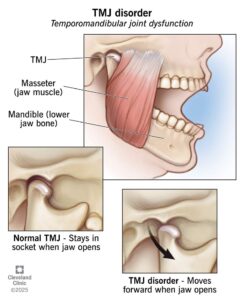
Jaw joint dysfunction can cause clicking sounds, pain, and limited movement.
Non‑Surgical Treatment Options
Most TMJ disorders respond well to conservative care. Initial steps often include eating soft foods, applying heat or cold to the jaw, taking over‑the‑counter NSAIDs like ibuprofen, and reducing habits such as gum chewing or jaw clenching. Your dentist or physician may prescribe muscle relaxants, antidepressants, or acetaminophen to relieve pain and tension.
Other non‑surgical therapies focus on relaxing the jaw and improving movement:
Custom mouth guards or splints to reduce grinding and clenching.
Physical therapy with jaw exercises and manual techniques to stretch and strengthen jaw muscles.
Trigger‑point injections, ultrasound therapy, or TENS (transcutaneous electrical nerve stimulation) to ease muscle tension.
Behavioral therapies such as meditation, relaxation techniques, cognitive behavioral therapy, or biofeedback, which help manage stress and reduce jaw tension.
Lifestyle modifications like maintaining good posture, reducing large bites, and avoiding chewing on hard objects.
These approaches often provide relief without altering the jaw structure, and they are considered first‑line treatments before considering surgery.
Surgical Options
When non‑surgical therapies do not provide sufficient relief, surgery may be considered as a last resort. Dr. Ademhan offers several surgical options based on the severity and cause of the disorder:
Arthrocentesis: A minimally invasive procedure that flushes the joint to remove debris and reduce inflammation.
Arthroscopy: A small camera (arthroscope) is inserted through tiny incisions to diagnose and treat joint conditions; this procedure is less invasive, resulting in a quicker recovery.
Open‑joint surgery: For severe joint damage, Dr. Ademhan may perform open surgery to repair or remove damaged tissue.
Joint realignment or replacement: In cases of significant misalignment or degenerative disease, the joint may need to be repositioned or replaced (TMJ replacement).
Surgical treatment decisions are made collaboratively with the patient, ensuring that risks and benefits are fully understood.
Dr. Onur Ademhan’s Approach
Dr. Onur Ademhan is an experienced oral and maxillofacial surgeon in Antalya. At his clinic, he adopts a conservative, patient‑centred approach to TMJ disorders. Each patient undergoes a thorough examination, including imaging such as X-rays, CT scans, or MRI to assess the joint and surrounding structures. Dr. Ademhan collaborates with physical therapists, orthodontists, and pain‑management specialists to tailor a non‑surgical treatment plan. Only when conservative methods fail does he recommend surgical intervention.
