“Turkey teeth” is a phrase many people in the UK search for before booking dental treatment abroad. It usually comes up in two ways: bright, perfect-looking smiles on social media, and stories of treatment that went wrong. The term itself is not a treatment. It is a nickname for a full set of crowns or veneers done in Turkey, and those two treatments affect your natural teeth in very different ways.
In this guide, we explain what Turkey teeth actually are, how veneers, crowns, and implants differ, how long each option lasts, why some results go wrong, and how to choose the option that protects your teeth in the long run.
- What Are Turkey Teeth?
- Are Turkey Teeth Veneers or Crowns?
- What Are Your Options for a New Smile?
- How Long Do Turkey Teeth Last?
- Why Do Some Turkey Teeth Go Wrong?
- How Do You Choose the Right Option for Your Teeth?
- How Can You Make Your New Smile Last?
- Smile Makeover with Dr. Onur Ademhan in Antalya
- Conclusion
What are turkey teeth?
“Turkey teeth” is a nickname that spread through UK social media for cosmetic dental work done in Turkey, usually a full set of bright white crowns or veneers covering the front teeth. Turkey has become a popular destination for dental treatment, and many patients combine a smile makeover with a holiday.
The problem is that the nickname puts very different treatments under one name. Two people can both say they “got Turkey teeth” while one had thin veneers bonded to the front of their teeth and the other had healthy teeth filed down to small pegs to fit crowns. The results may look similar on the first day, but the long-term effect on the teeth is not the same.
Are turkey teeth veneers or crowns?
A veneer covers only the front of the tooth. A crown covers the whole tooth, so more of the natural tooth is reduced.
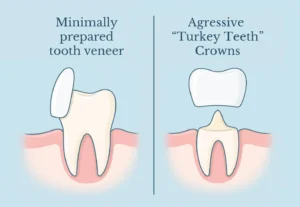
Veneers cover the front surface of a tooth, while crowns cover the visible tooth on all sides and generally require more tooth preparation
Many of the smiles people call Turkey teeth are actually full crowns, not veneers. Understanding the difference is the most important step before you book any smile design treatment.
Veneers are thin shells bonded to the front surface of the tooth. They change the colour, shape and size of the visible part of the tooth. For ceramic veneers, a thin layer of enamel is usually removed from the front of the tooth so the veneer sits naturally. Composite veneers can sometimes be applied with little or no tooth reduction.
Crowns are caps that cover the whole tooth. To fit a crown, the tooth has to be reduced on all sides. Crowns are the right choice for teeth that are broken, heavily filled, root canal treated or badly worn, but they are a much bigger step for a healthy tooth that only needs a cosmetic change.
In short:
- Veneers cover the front surface of the tooth, need less tooth removal, and are mainly used for cosmetic changes.
- Crowns cover the whole tooth, need more tooth removal and are mainly used to restore damaged teeth.
- Both are a long-term commitment. Enamel and tooth structure do not grow back once they are removed, so a prepared tooth will always need a covering.
What are your options for a new smile?
The right option depends on the condition of your teeth, your bite, and what you want to change. These are the four options most patients compare.
Composite Veneers
Composite veneers are made from tooth-coloured resin that is applied and shaped directly on the tooth. They usually need little or no tooth reduction and can be repaired or polished if they chip.
However, composite stains and chips more easily than ceramic, so it needs more maintenance. Composite veneers suit smaller changes, such as closing small gaps or reshaping chipped edges.
E-max Veneers
E-max veneers are thin ceramic veneers made from lithium disilicate in a dental laboratory. They have a natural, translucent look and resist staining well.
A thin layer of enamel is usually removed from the front of the tooth, so the treatment cannot be undone. E-max veneers suit healthy teeth that need a change in colour, shape or minor alignment.
Zirconia Crowns
Zirconia is one of the strongest ceramic materials used for crowns, and it can withstand heavy biting forces.
Zirconia crowns cover the whole tooth, which means the tooth is reduced on all sides. They are a good choice for broken, heavily filled, or root canal-treated teeth. They are not usually the first choice for a healthy front tooth that only needs a cosmetic change.
Dental Implants
When a tooth is missing or cannot be saved, veneers and crowns are no longer an option for that tooth. A dental implant is a small post placed in the jawbone to replace the tooth root, with a crown fitted on top.
For patients who are missing most or all of their teeth in one jaw, full arch solutions such as All-on-4 can support a complete set of fixed teeth. Because implants are placed surgically, the experience of the surgeon matters as much as the materials.
How long do Turkey Teeth Last?
There is no single answer because “Turkey teeth” can refer to several different treatments. The table below shows the typical lifespans reported for each option.
| Treatment Option | Typical Lifespan | What Can Shorten It? |
|---|---|---|
| Composite Veneers | Around 5 years or more with proper care. | Staining, chipping, teeth grinding, and poor oral hygiene. |
| E.max Ceramic Veneers | 10 years or longer in many cases with good maintenance. | Poor tooth preparation, teeth grinding, excessive bite forces, and poor oral hygiene. |
| Dental Crowns (Including Zirconia) | Approximately 5 to 15 years, sometimes longer with proper care. | Decay around crown margins, gum disease, poor fit, and excessive biting forces. |
| Dental Implants | The implant may last decades or even a lifetime. The crown or prosthesis may need replacement sooner. | Peri-implant gum disease, smoking, poor oral hygiene, and insufficient long-term maintenance. |
These figures are averages. How long your new smile lasts depends on how carefully the treatment is planned, how well each crown or veneer fits, and how well you look after it at home. It is also worth remembering that every veneer and crown will need to be replaced one day. The healthier the tooth that is kept at the start, the more options you have when that time comes.
Why Do Some Turkey Teeth Go Wrong?
Most problems come from choosing the wrong treatment for the tooth or rushing the process, not from the materials themselves.The most common causes are:
- Healthy teeth reduced for crowns. When teeth that only needed a cosmetic change are filed down for crowns, a lot of healthy tooth structure is lost. This removes the protective layer over the living tissue inside the tooth, which can lead to sensitivity and, in some cases, the need for root canal treatment.
- Poorly fitting edges. If a crown or veneer does not fit closely at the gum line, plaque collects there. This raises the risk of decay and gum inflammation underneath.
- Problems covered instead of treated. Gum disease, decay, or infection should be treated before any cosmetic work. Placing crowns or veneers over them can make them worse. You can read more in our guide to periodontal treatment in Antalya.
- An unbalanced bite. If new teeth are made too long or the bite is not adjusted properly, extra force on the teeth and jaw can lead to chipping and jaw discomfort.
- Rushed timelines. Fitting a full set of teeth on a very short trip leaves little time to check the bite, the gums, and the fit before you fly home.
How do you choose the right option for Your Teeth?
Before travelling for dental treatment, ask for an itemised treatment plan, the qualifications of the clinicians involved, the expected number of visits, and a clear explanation of what happens if additional treatment is needed after you return home:
- Do my teeth need veneers, crowns or a combination, and why?
- How much of my natural tooth will be removed?
- Are there any gum, decay or bite problems that need treating first?
- Which material will be used, and why is it right for my case?
- Can I see a preview of my new smile before treatment starts?
- Who will carry out each step of the treatment?
- What is the aftercare plan, and what happens if a veneer or crown chips?
How can You Make Your New Smile Last?
Good aftercare matters as much as the treatment itself. To protect your veneers, crowns or implants:
- Brush twice a day and clean between your teeth daily, paying extra attention to the gum line.
- Keep regular dental check-ups and professional cleanings.
- If you grind or clench your teeth, ask about a night guard, as grinding puts extra pressure on veneers and crowns. In some cases, masseter Botox can also help reduce clenching.
- Avoid using your teeth as tools, and be careful with very hard foods such as ice and hard sweets.
- Wear a mouthguard if you play contact sports.
- If you have composite veneers, regular polishing helps keep their colour.
Smile Makeover with Dr. Onur Ademhan in Antalya
Dr. Onur Ademhan is an oral and maxillofacial surgeon whose clinic is in the Lara district of Antalya. Every smile makeover starts with a thorough examination of the teeth, gums and bite, so the plan is based on what your teeth actually need.
Using smile design software, you can see a simulation of your expected smile and discuss changes before treatment begins. Depending on your teeth, the plan may include veneers, crowns, implants, or a combination of these. Because Dr. Onur Ademhan is also an implant surgeon, patients who need implants alongside cosmetic work can have their whole treatment planned together.
Conclusion
“Turkey teeth” is a nickname, not a treatment. Behind it are veneers, crowns, and implants, each with a different effect on your natural teeth and a different lifespan. Composite veneers usually last around five years or more, ceramic veneers often ten years or longer, crowns five to fifteen years, and implants can often last a lifetime with good care.
The best result keeps as much of your natural tooth as possible, treats any underlying problems first, and is looked after properly at home. If you are considering a smile makeover in Antalya, start with an examination and a clear plan rather than a package.
Are Turkey Teeth Veneers or Crowns?
They can be either. The nickname is used for both, but many of the smiles people call Turkey teeth are full crowns, which need much more of the natural tooth to be removed than veneers.
How Long Do Turkey Teeth Last?
It depends on the treatment. Composite veneers usually last around five years or more; ceramic veneers such as e-max often last ten years or longer; crowns last five to fifteen years on average; and dental implants can often last a lifetime with good care.
Do Veneers Ruin Your Natural Teeth?
Ceramic veneers usually need a thin layer of enamel removed from the front of the tooth, and this enamel does not grow back. When veneers are planned carefully, much less tooth is removed than for a crown. Composite veneers can sometimes be applied with little or no tooth reduction.
Are E-max Veneers or Composite Veneers Better?
Neither is better for everyone. E-max veneers last longer and resist staining better, while composite veneers need less tooth reduction and are easier to repair. The right choice depends on your teeth and what you want to change.
Can Turkey Teeth Be Fixed If Something Goes Wrong?
In many cases, yes. Crowns and veneers can be removed and replaced, and problems underneath, such as decay or gum disease, can be treated. What is possible depends on how much healthy tooth structure is left, so an examination is always the first step.
How Many Appointments Do I Need for Veneers or Crowns?
Ceramic veneers and crowns are usually made in a dental laboratory, so they usually need at least two appointments: one to prepare the teeth and take scans, and one to fit the final restorations. Composite veneers are shaped directly on the teeth, so there is no laboratory stage. Your treatment plan will show how many days you need to stay in Antalya.
Can I Have Implants and Veneers in the Same Treatment Plan?
Yes. Many patients need a combination, for example, implants to replace missing teeth and veneers or crowns for the visible front teeth. The timing depends on healing after implant surgery, so both treatments are planned together from the start.