An underbite or overbite can affect more than the appearance of your smile. Depending on its severity, jaw misalignment may make chewing uncomfortable, contribute to uneven tooth wear, or change the balance of your facial profile. One of the most common questions patients ask is whether these problems can be corrected with braces or if jaw surgery is necessary.
The answer depends on what causes the bite problem. Underbite treatment and overbite correction may involve orthodontics, corrective jaw surgery, or a combination of both. When the issue mainly involves tooth position, braces or clear aligners may be sufficient. However, when the upper and lower jaws have developed in significantly different positions, orthodontic treatment alone may not fully correct the underlying problem.
Understanding the difference between dental and skeletal misalignment is the first step toward choosing the right treatment.
- What Is an Underbite?
- What Is an Overbite?
- What Causes Jaw Misalignment?
- Can an Underbite Be Fixed Without Surgery?
- Can an Overbite Be Fixed Without Surgery?
- When Is Corrective Jaw Surgery Necessary?
- Orthodontics vs Jaw Surgery What's the Difference?
- How Is Jaw Alignment Evaluated?
- What Happens During Corrective Jaw Surgery?
- Jaw Alignment Assessment with Dr. Onur Ademhan
- Conclusion
What is an underbite?
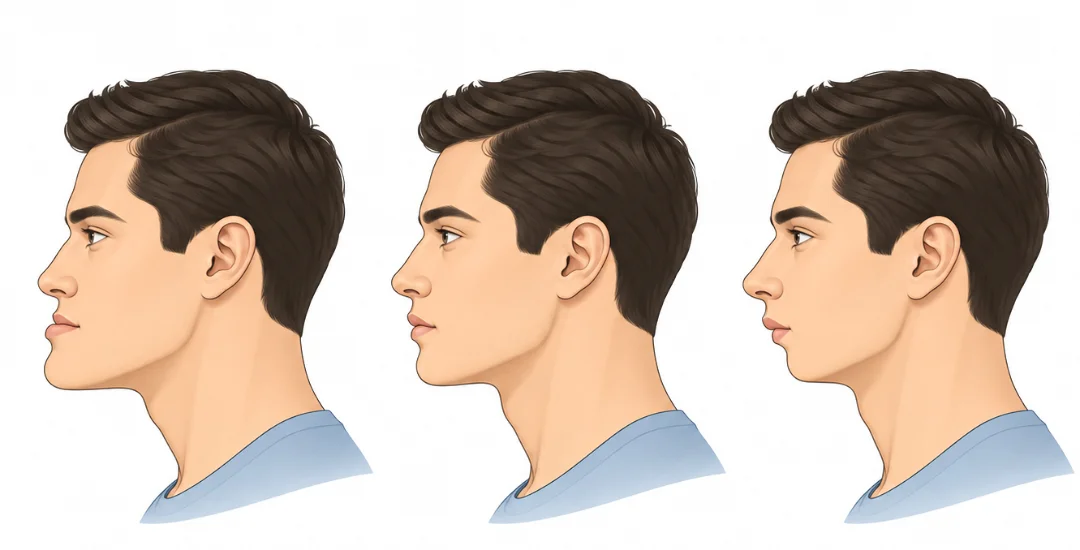
An underbite occurs when the lower front teeth sit in front of the upper front teeth when the mouth is closed. This can happen because of tooth positioning, the relationship between the upper and lower jaws, or a combination of both. In some patients, the lower jaw is positioned too far forward. In others, the upper jaw may be underdeveloped or positioned too far back. A pronounced underbite may be associated with:
- Difficulty biting or chewing certain foods
- Uneven wear on the teeth
- Changes in facial profile
- Speech difficulties in some patients
- Problems with how the upper and lower teeth meet
Not every underbite causes functional problems, and not every patient requires surgery. A clinical examination helps determine whether the condition is primarily dental or skeletal.
What is an overbite?
An overbite describes how much the upper front teeth overlap the lower front teeth vertically. A certain amount of overlap is normal. However, an excessive overbite, sometimes called a deep bite, may cause the upper teeth to cover a large portion of the lower teeth. An excessive overbite can sometimes contribute to tooth wear, irritation of the gums or palate, or difficulty maintaining a comfortable bite.
Patients also frequently confuse an overbite with an “overjet”. An overjet refers to the horizontal distance between the upper and lower front teeth, particularly when the upper front teeth project noticeably forward. Although these conditions may look similar, they are not identical and can require different treatment approaches.
What causes jaw misalignment?
Jaw alignment problems may develop for several reasons. Some are related to how the teeth erupt and move, while others involve differences in jawbone growth or facial development. Common contributing factors include genetics, differences in upper and lower jaw growth, dental crowding, certain childhood oral habits, developmental conditions, and previous facial or jaw injuries. The distinction between dental and skeletal causes is especially important.
Dental misalignment means the teeth are positioned incorrectly even though the underlying jaw relationship may be relatively balanced.
Skeletal misalignment means the upper jaw, lower jaw, or both have developed in positions that affect the bite and facial structure.
This distinction often determines whether orthodontic treatment alone can provide a satisfactory correction.
Can an underbite be fixed without surgery?
Yes. Some underbites can be corrected without jaw surgery, particularly when the problem is mild or mainly related to tooth position. Non-surgical underbite treatment may include braces, clear aligners in suitable cases, or other orthodontic appliances. For children and growing adolescents, certain orthodontic approaches may also influence jaw development when started at an appropriate stage. Treatment possibilities change as skeletal growth progresses.
For adults, the options depend heavily on the severity of the skeletal difference. Orthodontic camouflage may improve the relationship between the teeth in selected cases, even if the underlying jaw position remains unchanged. However, braces cannot physically reposition an adult’s fully developed jawbones.
If an underbite is caused by a significant skeletal discrepancy, corrective jaw surgery may be considered alongside orthodontic treatment. The goal is to choose a treatment that improves bite function while considering long-term stability, oral health, and facial balance.
Can an overbite be fixed without surgery?
Many cases of excessive overbite can be treated successfully with orthodontic care. Braces or clear aligners may help reposition teeth and adjust their vertical relationship. The treatment approach depends on the severity of the bite, the condition of the teeth, and whether the problem is primarily dental or skeletal.
A more complicated situation arises when an excessive overbite or associated overjet reflects a significant difference in jaw position. For example, a patient may have a lower jaw that is positioned substantially farther back than the upper jaw. In some cases, moving the teeth alone may improve the bite without fully correcting the skeletal relationship.
Corrective jaw surgery may therefore be discussed when a significant skeletal discrepancy affects function or when orthodontic treatment alone cannot achieve the agreed treatment goals. An overbite does not automatically mean surgery is necessary. The decision depends on a full orthodontic and surgical assessment.
When is corrective jaw surgery necessary?
Corrective jaw surgery, also known as orthognathic surgery, is designed to reposition the upper jaw, lower jaw, or both when skeletal differences interfere with bite function and jaw alignment. It may be considered when jaw misalignment is substantial and orthodontic treatment alone cannot adequately address the underlying problem.
Reasons for considering a surgical evaluation may include:
- Significant underbite or jaw protrusion
- Severe skeletal discrepancies associated with an overbite or overjet
- Difficulty biting or chewing because the teeth do not meet properly
- Pronounced jaw asymmetry
- Open bite caused by skeletal differences
- Functional problems associated with jaw position
- Certain breathing or speech difficulties related to jaw structure
Jaw surgery is not recommended solely because someone dislikes the shape of their jaw or has a mild bite irregularity. The decision requires careful consideration of the diagnosis, potential benefits, possible complications, alternatives, and the patient’s treatment goals. An oral and maxillofacial surgeon typically works with an orthodontist to determine whether surgery is appropriate.
Orthodontics vs Jaw Surgery what’s the difference?
Orthodontics and corrective jaw surgery address different aspects of bite and jaw alignment problems.
| Comparison | Orthodontic Treatment | Corrective Jaw Surgery |
|---|---|---|
| Main purpose | Moves teeth to improve alignment and bite. | Repositions the upper jaw, lower jaw, or both to address skeletal misalignment. |
| Best suited for | Dental misalignment and selected mild skeletal discrepancies. | Significant skeletal discrepancies when orthodontics alone cannot achieve the intended correction. |
| Changes jawbone position in adults? | No. Braces and aligners move teeth, not fully developed jawbones. | Yes. Surgery can reposition the jawbones. |
| Braces or aligners | Often the main treatment. | Orthodontic treatment is commonly needed before and after surgery. |
| Surgical procedure | Usually not required. | Required; typically performed under general anaesthesia. |
| Treatment planning | Primarily planned with an orthodontist. | Usually coordinated between an orthodontist and an oral and maxillofacial surgeon. |
In some patients, orthodontics alone can produce a functional and aesthetically satisfactory result. In others, attempting to correct a substantial skeletal problem by moving the teeth alone may not achieve the intended outcome. This is why the choice between orthodontics and jaw surgery should not be based only on photographs or the visible appearance of the teeth.
How is jaw alignment evaluated?
A detailed evaluation helps determine whether an underbite or overbite is caused mainly by tooth position, jawbone structure, or both. During an examination, the clinician may assess how the teeth meet, jaw movement, facial proportions, dental crowding, chewing function, and any related discomfort. Additional records may include:
- Intraoral and facial photographs
- Digital dental scans or impressions
- Panoramic dental X-rays
- Cephalometric X-rays and measurements
- Three-dimensional imaging when clinically indicated
- Assessment of jaw growth and skeletal maturity
These findings help the orthodontist and oral surgeon understand the relationship between the teeth, upper jaw, lower jaw, and surrounding structures. For patients with a significant skeletal discrepancy, collaborative planning can help establish whether orthodontic treatment alone is appropriate or whether surgery should be considered.
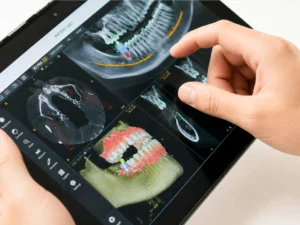
Digital dental imaging helps specialists assess jaw anatomy and plan treatment. Underbite and overbite evaluations may also require bite analysis, cephalometric X-rays, and other clinical measurements
What happens during corrective jaw surgery?
Corrective jaw surgery is performed to move the jawbones into a planned position. Depending on the diagnosis, treatment may involve repositioning the upper jaw, the lower jaw, or both. Orthodontic treatment is frequently needed before and after the operation to coordinate the position of the teeth. The operation is generally performed under general anaesthesia, and the repositioned jawbones are stabilized using suitable fixation techniques.
Recovery involves temporary swelling, dietary modifications, follow-up examinations, and a gradual return to normal activities. The full process, including orthodontics and healing, can extend over many months. Because every case is different, patients should receive a personalized explanation of the expected treatment duration, risks, limitations, and recovery requirements. For a detailed explanation of surgical preparation and healing, read our Corrective Jaw Surgery in Antalya guide.
Jaw alignment assessment with Dr. Onur Ademhan
Dr. Onur Ademhan, an oral and maxillofacial surgeon in Antalya, evaluates complex jaw and bite problems through clinical examination and appropriate imaging. When a patient presents with an underbite, overbite, facial asymmetry, or difficulty chewing, the assessment focuses on understanding whether the concern originates from the teeth, the jawbones, or a combination of both. Treatment planning may involve coordination with an orthodontist to determine whether non-surgical correction is suitable or whether orthognathic surgery should be considered.
The objective is to develop an individualized plan that takes into account bite function, jaw structure, oral health, and realistic treatment expectations. For patients who want to understand the broader role of the specialty, our guide What Does an Oral and Maxillofacial Surgeon Treat? explains the different conditions managed by oral and maxillofacial surgeons.
Conclusion
So, can an underbite or overbite be fixed without jaw surgery? In many cases, yes. When misalignment is primarily dental, orthodontic treatment may be enough. Even some skeletal differences can be managed without surgery in carefully selected patients.
However, significant skeletal jaw discrepancies may require corrective jaw surgery to achieve the intended functional and structural correction. The most important step is identifying the cause of the problem rather than choosing a treatment based only on appearance. A combined orthodontic and maxillofacial evaluation can help patients understand the available options and make informed decisions.
Can braces fix an underbite without surgery?
Braces can correct some underbites, especially when the problem involves tooth positioning. Significant skeletal underbites in adults may require surgical evaluation because braces cannot reposition fully developed jawbones.
Does every overbite require jaw surgery?
No. Many excessive overbites can be treated with braces or clear aligners. Surgery is generally considered for selected cases involving significant skeletal discrepancies that cannot be adequately corrected with orthodontics alone.
Is underbite treatment different for adults and children?
Yes. Children and adolescents may have treatment options that take advantage of ongoing jaw growth. Adults with completed skeletal growth may have different orthodontic and surgical options.
How do I know if my bite problem is skeletal?
A clinical examination, assessment of facial and dental relationships, and appropriate imaging can help distinguish skeletal jaw misalignment from dental misalignment.
Is orthognathic surgery the same as corrective jaw surgery?
Yes. Orthognathic surgery is the medical term for corrective surgery designed to reposition the jaws and improve their relationship with the teeth and facial structures.
Can clear aligners correct an underbite or overbite?
Clear aligners may be suitable for some dental bite problems, depending on complexity. They cannot independently correct significant adult skeletal jaw discrepancies. Suitability should be assessed by an orthodontist.
Does jaw misalignment cause TMJ problems?
Jaw misalignment and temporomandibular joint disorders can coexist, but one does not automatically cause the other. Persistent joint pain, locking, or restricted movement requires a separate clinical assessment.
When should I consult an oral and maxillofacial surgeon?
A surgical consultation may be appropriate when a significant jaw discrepancy affects chewing, facial symmetry, bite function, or other aspects of daily life, particularly if orthodontic treatment alone may be insufficient.