Wisdom tooth extraction is one of the most common oral surgery procedures, but not every wisdom tooth needs to be removed immediately. Some wisdom teeth grow normally and remain healthy, while others become impacted, infected, painful, or harmful to nearby teeth.
The important question is not only “Do I have wisdom teeth?” but “Are my wisdom teeth creating a current or future risk?” A detailed evaluation helps determine whether monitoring, treatment, or surgical removal is the safest option.
- What Are Wisdom Teeth?
- When Does a Wisdom Tooth Need Removal?
- Symptoms You Should Not Ignore
- Simple Extraction vs Surgical Wisdom Tooth Extraction
- Why Imaging Matters Before Wisdom Tooth Removal
- Can Wisdom Teeth Cause Jaw Pain?
- Recovery After Wisdom Tooth Extraction
- What Happens If an Impacted Wisdom Tooth Is Ignored?
- Wisdom Tooth Evaluation by Dr. Onur Ademhan
- Conclusion
What are wisdom teeth?
Wisdom teeth are the third molars located at the very back of the mouth. They usually appear during the late teenage years or early adulthood. In some patients, wisdom teeth erupt normally and do not cause problems. In others, there may not be enough space in the jaw, causing the tooth to remain partially or fully trapped under the gum or bone. This is known as an impacted wisdom tooth.
When a wisdom tooth is impacted, difficult to clean, or positioned against nearby teeth, it may increase the risk of pain, infection, decay, gum problems, or pressure on surrounding structures.
When does a wisdom tooth need removal?
Wisdom tooth removal may be recommended when the tooth causes pain, swelling, repeated infection, decay, pressure on nearby teeth, cyst formation, or difficulty cleaning the area properly.
Removal may be necessary when:
- The wisdom tooth is impacted
- The gum around the tooth becomes repeatedly infected
- The tooth causes pain or swelling
- There is decay in the wisdom tooth
- The second molar is being affected
- A cyst forms around the impacted tooth
- The area is difficult to clean
- The tooth is damaging nearby structures
Not every wisdom tooth needs surgery. However, if the tooth is creating ongoing symptoms or future risk, professional evaluation is important. For patients who need a dedicated treatment page, you can learn more about wisdom teeth removal in Antalya.
Symptoms You Should Not Ignore
Wisdom tooth problems may start mildly and become worse over time. Some patients feel occasional pressure, while others experience severe pain or infection. Common symptoms include:
- Pain at the back of the jaw
- Swelling around the gum
- Bad taste or bad breath
- Difficulty chewing
- Pain when opening the mouth
- Pressure near nearby teeth
- Repeated inflammation around the tooth
- Gum tenderness behind the second molar
If these symptoms continue or return repeatedly, wisdom tooth extraction may be considered after a clinical examination and imaging.
Simple extraction vs surgical wisdom tooth extraction
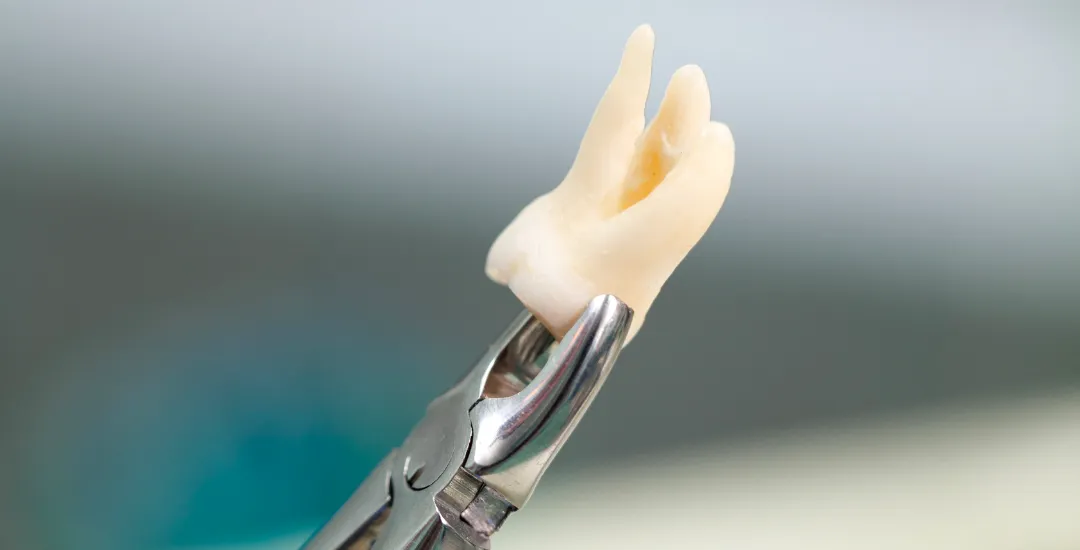
A wisdom tooth that has fully erupted may sometimes be removed with a simple extraction. This is usually possible when the tooth is visible, accessible, and not deeply trapped under the gum or bone. However, impacted wisdom teeth often require surgical tooth extraction. In surgical cases, the gum may need to be opened, a small amount of bone may be removed, or the tooth may be divided into smaller sections for safer removal. The exact method depends on the tooth position, root shape, bone structure, and relationship with nearby nerves.
If the wisdom tooth is not impacted and the case is straightforward, it may be treated similarly to other tooth extraction procedures. More complex cases should be planned carefully by an oral surgery specialist.
Why does imaging matter before wisdom tooth removal?
Before wisdom tooth extraction, panoramic X-rays or 3D imaging may be used to evaluate the tooth and surrounding anatomy. Imaging helps the surgeon understand:
- The angle of the wisdom tooth
- Whether the tooth is fully or partially impacted
- The position of the roots
- The relationship with nearby nerves
- Whether the second molar is affected
- Whether there is cyst formation around the tooth
This step is especially important for lower wisdom teeth, deeply impacted teeth, or cases close to the nerve canal.
Can wisdom teeth cause jaw pain?
Wisdom teeth can sometimes cause pain near the back of the jaw, especially when they are impacted, infected, or pressing on surrounding tissues. However, jaw pain does not always come from wisdom teeth. Similar symptoms may also be related to TMJ problems, muscle tension, tooth infection, jaw trauma, or other oral surgery conditions. If jaw pain, clicking sounds, or difficulty opening the mouth are present, evaluation for TMJ disorder treatment may also be needed.
In more complex cases where bite, jaw structure, or facial balance is involved, patients may benefit from reading more about corrective jaw surgery and related jaw conditions.
Recovery after wisdom tooth extraction
Recovery depends on the difficulty of the extraction, the tooth position, and the patient’s overall health. Mild swelling, tenderness, and limited mouth opening can occur during the first few days.
Most patients are advised to:
- Follow post-operative instructions carefully
- Avoid hard foods at first
- Keep the area clean
- Avoid smoking during healing
- Use prescribed medication as directed
- Avoid touching the wound area unnecessarily
- Attend follow-up appointments if needed
A smooth recovery depends not only on the procedure itself, but also on careful aftercare.
What happens if an impacted wisdom tooth is ignored?
Some impacted wisdom teeth remain stable and only require monitoring. Others may cause problems over time, even if pain is not constant. Ignoring a problematic wisdom tooth may lead to repeated infections, decay, gum disease, damage to the second molar, cyst formation, swelling, or more complex surgery later. In some cases, cysts can develop around impacted teeth. If you want to understand this risk in more detail, read our guide on jaw cyst treatment in Antalya.
Wisdom Tooth Evaluation by Dr. Onur Ademhan
Dr. Onur Ademhan evaluates wisdom tooth problems using a detailed approach in oral and maxillofacial surgery. Each case is assessed based on symptoms, tooth position, imaging findings, nearby nerves, and the patient’s overall oral health. If your wisdom tooth is painful, impacted, infected, or affecting nearby teeth, a professional evaluation can help determine whether removal is necessary or whether monitoring is enough. The goal is not simply to remove teeth, but to choose the safest and most appropriate treatment plan for each patient.
Conclusion
Wisdom tooth extraction is not always necessary, but when a wisdom tooth becomes impacted, painful, infected, or harmful to nearby teeth, removal may be the best option. A proper examination helps determine whether the tooth should be monitored, treated, or surgically removed. Early evaluation also helps reduce the risk of complications and supports better long-term oral health.
Medical References and Further Reading
For patients who want to learn more about wisdom tooth extraction and impacted wisdom teeth, the following medical resources provide helpful general information. The American Association of Oral and Maxillofacial Surgeons explains that impacted wisdom teeth may damage nearby teeth, become infected, cause cysts, pain, decay, or gum disease if not properly monitored.
AAOMS: